Closed every Monday. If you are in Agadir on a cruise call or a short stay that falls on a Monday, plan something else; our cruise port guide and Agadir in 1 day have alternatives.
Opening days and hours
| Day | What to expect |
|---|---|
| Monday | Closed (weekly cleaning) |
| Tuesday – Thursday | Open, calmest; best for browsing and haggling |
| Friday | Open, but many stalls shut for a few hours around midday prayer |
| Saturday | Open, busier |
| Sunday | Open, busiest day: "El Had" means Sunday |
Hours are roughly 8:00/9:00 to 19:00/20:00; food sections can open from about 6:00. During Ramadan everything shifts later. Checked October 2026. Our Agadir opening hours tool shows what is open now.
Layout: gates and sections
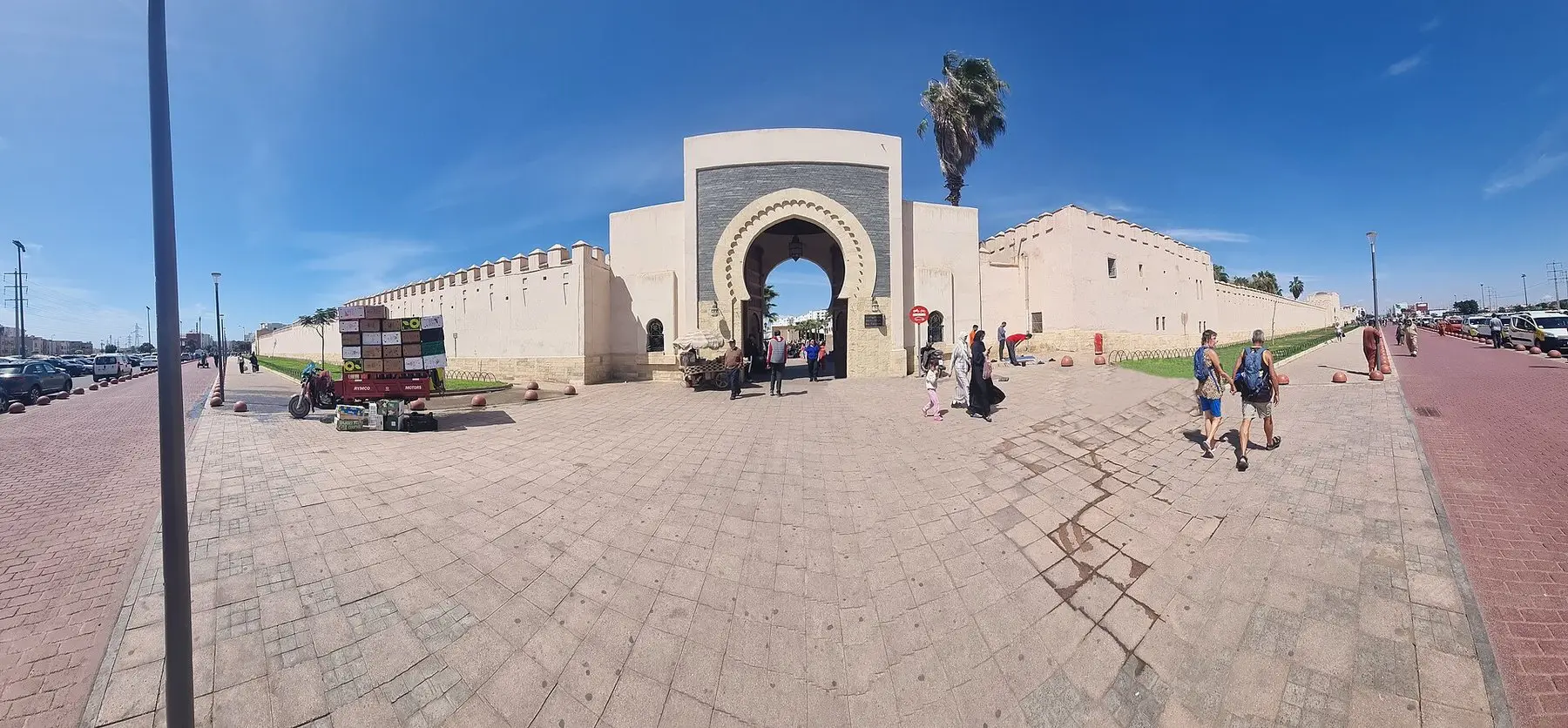
Souk El Had is a walled market of about 13 hectares, surrounded by 6-metre walls with 13 numbered gates and more than 3,000 shops (some sources say 6,000). It was rebuilt after the 1960 earthquake and later renovated, and it is easy to find your way around on your own.
- Note the number of the gate you enter by. It is the simplest way to find your way back out to your taxi.
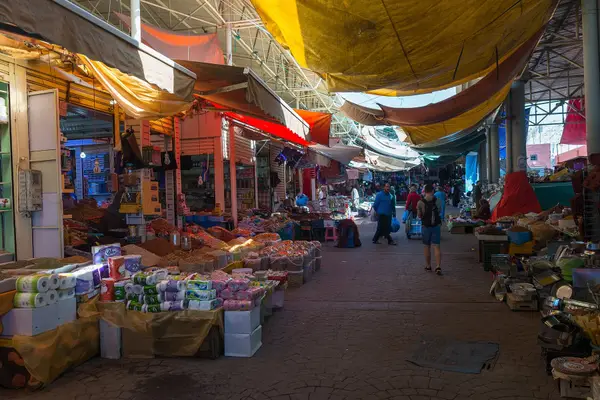
- Food sections (around Gate 5, according to a 2025 visitor): fruit, vegetables, olives, dates, spices. Local prices, little haggling.
- Tourist crafts (around Gates 8–10, same source): leather, ceramics, lanterns, rugs, argan products. This is where prices start high.
- Everything else: clothes, household goods, hardware. The part locals come for.
What to buy
- Spices, dates, dried fruit, olives and amlou (argan, almond and honey spread): local prices in the food sections.
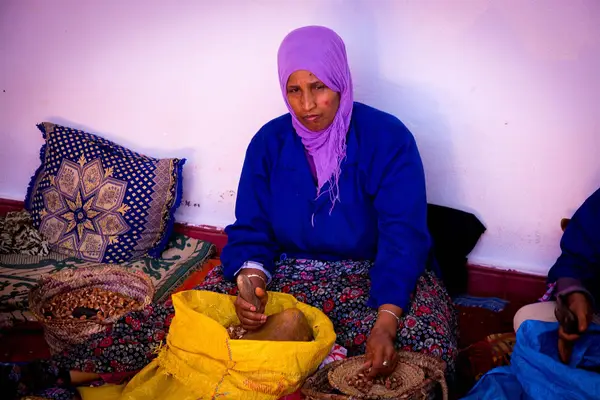
- Argan oil and cosmetics. The benchmark for a litre of argan oil is around 600 MAD (~€55), and cooperative cosmetic oil runs 300–650 MAD/L. Suspiciously cheap means diluted.
- Leather babouches, ceramics, lanterns, rugs. Haggling territory.
- Hammam kit: black soap and a kessa scrubbing glove cost very little here; take them to a public hammam.
Haggling and fair prices
Haggling is normal for crafts and expected, but it is not a fight. These are rules of thumb, not fixed numbers:
- Only start if you intend to buy. Agreeing on a price and walking away is bad manners.
- Counter at about a third to a half of the first price asked to a tourist for crafts, then meet in the middle.
- Produce and spices have near-fixed local prices: no need to haggle hard over a kilo of dates.
- Cash helps, and so does buying several items from one stall.
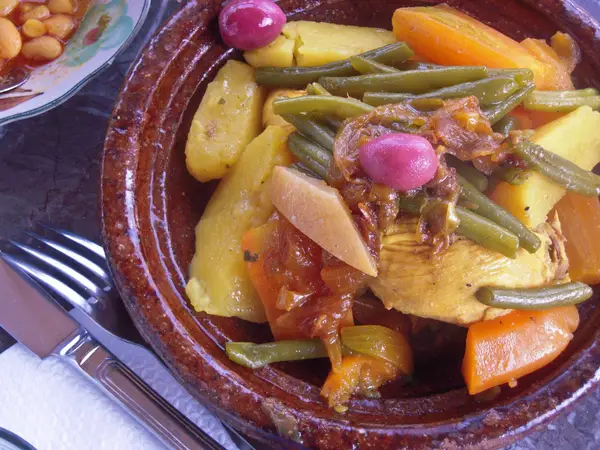
- Know the benchmarks: mint tea 8–15 MAD, fresh orange juice 10–15 MAD, a tagine meal 35–70 MAD in a local place. Our Agadir fair prices list has more.
If you want fixed prices and no negotiation at all, the workshops in the Medina Polizzi work that way, at a premium.
Hustles to know about
Agadir is low-hassle compared with Marrakech, but the souk gates have one classic: self-appointed "guides" or "security guards" who attach themselves to you, walk you to particular shops and take a commission on what you buy. A firm "la, shukran" (no, thank you), or saying you live locally, usually ends it. Official guides carry a badge. The rest of the list is in Agadir scams.
Also watch phones and wallets in the Sunday crowds; petty theft is the main risk, as in any busy market.
Getting there
- Where: Avenue Abderrahim Bouabid, central Agadir, near the main bus station.
- Petit taxi from the beach or Founty: expect roughly 10–20 MAD on the meter by day.
- From the airport or a hotel outside town, see Agadir airport to the city for buses and taxis.
Things nobody tells you
- Go early, Tuesday to Thursday. Calmer aisles, more patient sellers.
- See the real thing first: an hour in the Amazigh Heritage Museum shows you what genuine Souss silver jewellery looks like.
- Plan your days: the souk fits a morning in Agadir in 3 days. More ideas in things to do in Agadir.
Souk El Had: frequently asked questions
What days is Souk El Had open?
Tuesday to Sunday. It is closed on Monday for weekly cleaning. "El Had" means Sunday, and Sunday is the busiest day. Many stalls also close for a few hours around Friday midday prayer.
What are Souk El Had opening hours?
Roughly 8:00/9:00 to 19:00/20:00; some food sections open from about 6:00. Hours shift later during Ramadan.
Is there an entrance fee?
No, entry is free. Bring cash: most stalls do not take cards, and it is better not to rely on finding an ATM inside.
How much should I pay in Souk El Had?
Food, spices and produce have near-fixed local prices. For crafts, a common rule of thumb is to counter at a third to a half of the first price asked to a tourist and meet somewhere in between. Our fair prices page lists reference prices, including argan oil (around 600 MAD a litre for the real thing).
Do I need a guide for Souk El Had?
No. The souk is walled, with 13 numbered gates, and easy to explore alone. The "guides" or "security guards" who attach themselves to you at the gates work on commission from the shops they steer you into.
When is the best time to visit?
Tuesday to Thursday mornings: calmer aisles and more flexible sellers. Go on Sunday for the full local crowd, and avoid Friday midday and Mondays.
How long do I need?
1.5–3 hours. The souk covers about 13 hectares with more than 3,000 shops; you will not see it all, so decide what you want before you go in.
Is Souk El Had safe?
Yes, it is a busy local market. Watch your phone and wallet in the crowded Sunday aisles and ignore anyone insisting on guiding you. See Is Agadir safe? for the bigger picture.
More Agadir guides
Marrakech day trip

Imsouane

Water parks
Dolphin World
Also useful: Agadir scams · Agadir in 3 days · Things to do · Best time to visit · Paradise Valley · Camel rides